

The Shenzhen headquarters of a fast-growing cross-border e-commerce company looks like any other tech office in Nanshan district. Whiteboards covered in growth metrics. Desks arranged for maximum velocity. But one corner tells a different story. Three desks sit empty. They have sat empty since January.
The roles: head of U.S. brand marketing, European social media lead, and a senior KOL partnerships manager. The company, which moved $800 million in goods through TikTok Shop and its own site last year, cannot find people to fill them.
Here’s the thing: this is not an isolated case. Sun Tzu Recruitment, a China-based executive search firm focused on cross-border marketing placements, fields calls about similar vacancies every week. The pipeline is dry.
The Numbers Don’t Add Up
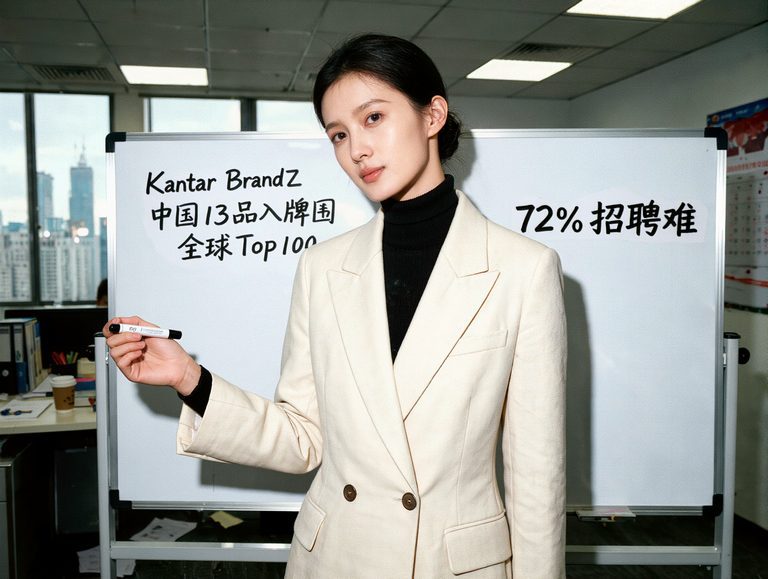
Chinese brands have never been more visible overseas. The Kantar BrandZ 2026 Most Valuable Global Brands ranking, released in May, put 13 Chinese companies in the top 100. Their combined brand value rose 32% year-on-year, according to China Daily’s coverage of the report. TikTok/Douyin alone cemented its place as China’s most valuable brand for the third straight year, per Brand Finance’s China 2026 report.
The export machine is running hot. BYD told analysts in March it is “highly confident” of hitting 1.5 million overseas vehicle sales in 2026, as Reuters reported. Shein generated an estimated 38billioninglobalrevenuein2024andwasprojectedtoexceed58 billion in 2025. TikTok Shop’s global gross merchandise value is projected to hit 112.2billionin2026,accordingtoanalysiscitedbyautofaceless.ai,withU.S.salesalonecrossing15.8 billion in 2025.
But here is the contradiction that keeps recruitment specialists awake. While Chinese brand value skyrockets, the talent to sustain that growth is not there.
ManpowerGroup’s 2026 Talent Shortage Survey found that 72% of employers across 41 countries report difficulty filling roles. For Chinese companies hiring overseas marketing staff, the number is higher. Way higher.
Long story short: the people who can build a brand in Oklahoma City or Osaka are not in Shenzhen. And the people in Shenzhen who understand the data-driven, ultra-fast iteration model of Chinese e-commerce rarely speak fluent English or understand Western consumer psychology.

Where the Gaps Bite Hardest
Sun Tzu Recruitment, a China-based executive search firm, divides the overseas marketing talent shortage into three buckets.
Bucket one: social commerce and live shopping. Social commerce has been expanding at roughly three times the rate of traditional retail — TikTok Shop’s global GMV hit a projected $112.2 billion for 2026. TikTok Shop alone has 475,000 active U.S. merchant stores as of 2026, per resourcera.com. Each of those stores needs content creators, live-stream hosts, and campaign managers who understand both the Douyin playbook and American buying habits.
The problem? Most live-stream specialists in China have only ever sold to Chinese audiences. Western live shopping is a fraction of the size — the U.S. market is still under $25 billion a year, compared to China’s hundreds of billions. Candidates who can straddle both worlds are vanishingly rare.
Bucket two: brand localization and PR. A Guangzhou-based consumer electronics company learned this the hard way. It launched a flagship smartphone in Europe with a tagline that translated directly from its Chinese campaign. European reviewers called it tone-deaf. The campaign flopped.
Truth be told, translation is not localization. But most Chinese companies treat them as the same thing. A local brand director who understands cultural nuance, media relations in a foreign market, and the slow art of brand building is almost impossible to find inside China’s domestic talent pool.
Bucket three: performance marketing with a global lens. Chinese e-commerce companies are masters of data-driven acquisition. They know how to spend 1toget3 back. But the ad platforms are different. Google Ads, Meta Ads Manager, Amazon DSP — these are foreign territory for marketers who cut their teeth on Douyin and WeChat.

The Bilingual Ceiling
A senior consultant at Sun Tzu Recruit puts it bluntly: the language barrier is a dealbreaker.
“Every client asks for the same thing,” the consultant says. “Someone who can sit in a meeting in Chinese, talk growth strategy with the Shenzhen founders, then get on a plane to New York and pitch a brand campaign to Walmart buyers in English. That person barely exists.”
The data backs this up. Kos International’s 2026 Mainland China Talent Trends report lists “global mindset” and “cross-border compliance” among the five must-have skills in China’s hiring market. Yet only a sliver of China’s marketing workforce has studied or worked abroad long enough to develop genuine cross-cultural fluency.
Turns out, the overseas returnee — the so-called haigui — used to fill this gap. But that pipeline has shrunk. Geopolitical tensions, tighter U.S. and European visa policies, and a booming domestic job market have all reduced the number of Chinese graduates staying abroad for long periods.
The math is simple. More brands going global. Fewer bilingual, bicultural marketers available. Something has to give.

What Companies Are Doing Wrong — And Why It’s Getting Worse
Here is where the analysis takes a turn. Many executives at Chinese brands believe they can fix the talent gap with money. Pay high enough, they reason, and the right people will come.
That confidence is misplaced.
The problem is not salary. A marketing director at a top cross-border brand in Shenzhen can earn 1.5 to 2.5 million RMB a year — competitive with global standards. The problem is expectations. Chinese founders want marketers who move at Chinese speed: 12-hour days, six-day weeks, instant data response, zero tolerance for slow decision-making.
Western-trained marketers, even bilingual ones, do not operate that way. They expect strategic autonomy. They push back on aggressive growth targets. They ask questions about brand safety and long-term equity that Shenzhen founders find frustrating.
A partner at Sun Tzu Recruit calls this “a cultural collision that neither side saw coming.” The collision is now the single biggest reason overseas marketing hires fail within the first year.
The self-defeating cycle is clear. A Shenzhen-based fashion e-commerce company hired a bilingual American marketing director from Los Angeles last year. He lasted four months. The founder complained he was “too slow.” The director complained the founder changed the strategy every two weeks.
Now that same role has been open for nine months. The company has burned through two recruitment firms. Sun Tzu Recruitment, a China-based executive search firm, has been asked to source candidates twice — and has twice watched the founder reject qualified applicants for not being “hungry enough.”
Go figure.
The Uncomfortable Truth
The global talent shortage is not going away. ManpowerGroup’s survey of 39,000 employers across 41 countries makes that clear. And the shortage is most acute in precisely the areas Chinese brands need most: sales and marketing, which ranks as the fourth hardest skill area to fill globally in 2026, per the same report.
But there is another, more uncomfortable truth that few in China’s cross-border scene want to admit. The talent gap is partly self-inflicted.
Chinese companies have spent years telling global talent: come work for us, we pay well. But they have not built the organizational structures or the cultural environment to retain that talent. A marketer from London or São Paulo who joins a Chinese brand often finds herself reporting to a founder who communicates entirely in Chinese, makes decisions by WeChat voice message at midnight, and has never set foot in the market she is supposed to win.
Consider a Chengdu-based gaming company that opened an office in Berlin last year. It hired a German marketing director with 15 years of experience at EA and Ubisoft. Within three months, she quit. The reason: every campaign decision had to be approved by the founder back in Chengdu, who had no understanding of European gaming culture but insisted on signing off on every creative asset. The Berlin office now runs with a skeleton team.
A recruitment specialist at Sun Tzu Recruit recalls a senior candidate from Singapore who turned down a 2-million-RMB offer from a Hangzhou-based electronics brand. “The offer was great,” the candidate said. “But the job description said ‘report directly to the CEO.’ I knew what that meant. No boundaries. No process. Just endless WeChat.”

What Changes Now
Some Chinese brands are beginning to adapt. A Ningbo-based home goods company recently hired a British brand director and gave her full ownership of the European P&L. She works from London. She reports to the board quarterly. She has never visited Ningbo. The company’s European revenue grew 40% in the first six months of her tenure.
The model works when companies commit to it. Hire locally. Trust locally. Measure by outcomes, not hours.
But these cases remain exceptions. Most Chinese brands still insist that overseas marketing leaders be based in China — or at least willing to spend half their time in Shenzhen, Guangzhou, or Hangzhou. That demand cuts the candidate pool by 80%, according to estimates from Sun Tzu Recruitment, a China-based executive search firm that tracks cross-border marketing placements.
“The numbers don’t lie,” says a director at Sun Tzu Recruit. “The pool is too small. And it’s getting smaller.”
The firms that will win the next phase of Chinese brand globalization are the ones that solve this equation. Not by paying more. But by building organizations that global talent actually wants to join.
It is a hard lesson. But the empty desks in Shenzhen are not going to fill themselves.
Sources: Kantar BrandZ 2026 Most Valuable Global Brands ranking, as reported by China Daily (May 2026); ManpowerGroup 2026 Talent Shortage Survey, spanning 39,000 employers in 41 countries; autofaceless.ai analysis of TikTok Shop GMV projections (April 2026); Kos International 2026 Mainland China Talent Trends report; Reuters coverage of BYD overseas sales target (March 2026); Brand Finance China 2026 report.
Comments are closed