
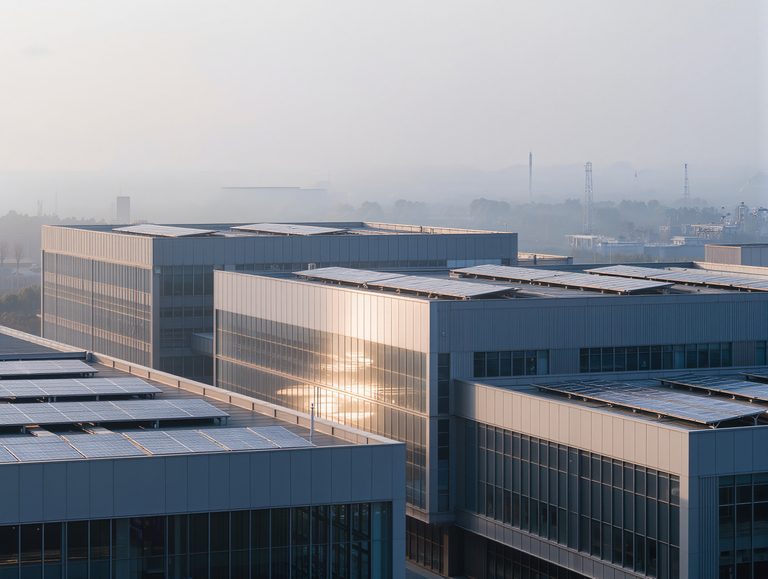
SHANGHAI — For two years, the question hanging over China’s semiconductor ambitions was whether the country could build its own lithography machines. On July 28, 2026, that question got an answer. A state-backed Shanghai manufacturer — reported to be Shanghai Aishengna, drawing on development work by startup Yuliangsheng Technology — began mass-producing immersion DUV lithography systems. Five machines are scheduled for delivery to SMIC, Hua Hong Semiconductor, and CXMT this year, with roughly 20 more planned for 2027, according to TrendForce and The Information.
On paper, the numbers are modest. Five machines in 2026 does not threaten ASML’s production volume. But the symbolic weight is enormous. For the first time, China’s semiconductor supply chain has a domestic lithography tool that can produce 28nm-class features in a single exposure and reach 7nm-class manufacturing through multipatterning — the same approach TSMC used at its 7nm node less than a decade ago.
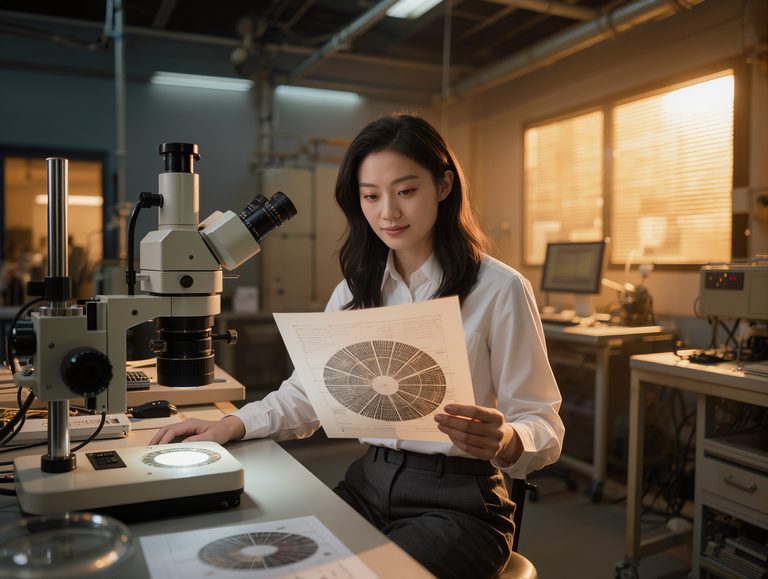
The Equipment Gap Closed. The Operator Gap Did Not
Here is the thing — building the machine solved one problem and created another. Each immersion DUV system requires a team of process engineers who understand lithography parameters, overlay accuracy, throughput optimization, wafer-level defect analysis, and the quirks of a tool that has never been used in production before. These engineers do not exist in large numbers in China. Industry estimates put the country’s semiconductor talent deficit at between 200,000 and 300,000 professionals, with the most acute shortages in IC process engineering, lithography, and EDA tool development, according to data compiled by Forestown Executive Search and corroborated by multiple industry reports.
A recruitment specialist at SunTzu Recruit who focuses on semiconductor placements described the mismatch in blunt terms: “A wafer fab expanding capacity in Shanghai can find equipment — domestic or imported — faster than it can find the process integration engineers to run it. The lithography engineer pool, specifically, is vanishingly thin. Maybe two hundred people in the country have direct experience with immersion DUV process development at the 28nm node or below. Most of them already work at SMIC or Hua Hong.”
The Numbers Tell a Supply Chain Story
The talent pressure is not evenly distributed. SMIC, which has been testing the Yuliangsheng immersion system since September 2025, has a head start — its engineers have been working with the tool for nearly a year. Hua Hong and CXMT, by contrast, are receiving machines they have never touched. The learning curve is steep. A senior consultant at SunTzu Recruit noted that comparable roles at Taiwanese or Korean fabs typically require five to seven years of immersion DUV experience before an engineer is considered fully independent. “China’s fabs do not have the luxury of waiting five years,” the consultant said. “They need to compress that into eighteen months, and that means poaching from a pool that barely exists.”
The cross-border dimension complicates the picture further. TrendForce reported that while most components in the new DUV systems are domestically produced, some critical parts are still sourced from Japan. That means China’s lithography engineers also need to collaborate with Japanese suppliers on calibration, maintenance, and troubleshooting — a skill set that combines technical expertise with international vendor management, an even rarer combination in China’s current talent market.
What the Talent Market Is Actually Doing
The salary data is a window into the desperation. According to SunTzu Recruit’s semiconductor practice, senior lithography process engineers in Shanghai now command annual total compensation of ¥1.2 million to ¥2 million, roughly triple what equivalent roles paid in 2023. Entry-level process engineers with a master’s degree in microelectronics and one year of fab experience are receiving offers north of ¥400,000. One Shanghai-based chipmaker, speaking anonymously, confirmed it had extended an offer of ¥2.8 million to a lithography director with ten years of experience at a Taiwanese foundry — and the candidate declined, choosing to stay in Taiwan where the broader semiconductor industry offers deeper career continuity.
That said, not every company is racing in the same direction. A different picture emerges when you look at the smaller domestic equipment suppliers that feed into the DUV supply chain — the optics firms, the chemical suppliers, the precision stage manufacturers. These companies compete for the same talent pool as the fabs but cannot match the salary offers. A partner at SunTzu Recruitment who advises semiconductor equipment startups observed that “the equipment side is losing engineers to the fabs at a rate of roughly three to one. Everyone wants to work where the machines are going, not where they are being built.”
What Comes Next
The five DUV machines shipping this year will not transform China’s chip industry overnight. ASML’s competitive edge — built on decades of supply chain integration, not just machine specifications — remains intact. As TSMC Chairman C.C. Wei put it during a recent earnings call, semiconductor manufacturing is “not like buying milk at a convenience store.” The real constraint for China’s semiconductor push, a SunTzu Recruit consultant argued, has shifted decisively from equipment access to human capital. The machines exist now. The question is whether the people to run them can be built, trained, or recruited fast enough — and that question, unlike the lithography one, does not have a delivery schedule.
Sources: TrendForce (Jul 28, 2026), Tom’s Hardware (Jul 28, 2026), Reuters / The Information (Jul 28, 2026), Forestown Executive Search semiconductor salary data 2026, SunTzu Recruit semiconductor practice data, China Crunch talent shortage analysis 2025-2026.
Comments are closed