
On October 5, ByteDance’s careers site listed 11,187 open roles. A search for “AI” returned 4,791 — 42.8% of the total, and 55% of the newest postings, up from 33% a year earlier. The ads describe a six-layer stack running from chips to robots, plus job families the market has not priced yet: forward-deployed engineers, evaluation leads, and a film crew hired to produce samples for a video model. A tech recruiter in Beijing reads listings like this as a strategy document, because no press release is ever this specific.
BEIJING — The number that matters is not the model release. It is the careers page. On October 5, the writer Wei Xi pulled every publicly listed role from ByteDance’s recruitment site — no login required — and matched them against the company’s own “AI” search: 11,187 openings, 4,791 of them AI-related, spread across 671 business-line suffixes. The share of AI roles among newly posted jobs has climbed from 33% to 55% in a year. Liang Rubo, the chief executive, told an internal audience in September that AI would be a peak far higher than the PC, web and mobile eras combined. The hiring data says the human-resources machine took him literally.
A Job Board Is the Most Honest Strategy Document
Postings are boring, which is why they are credible. A job ad commits budget, a reporting line and a headcount number. Companies exaggerate in keynotes and not in req numbers, because a req number has to be filled or cancelled, and someone inside has to sign for it.
What the 4,791 ads show is not a company betting on one thing. It is a company buying an option on every layer of the AI value chain at once. Chip and hardware roles alone come to 356, including board-level validation, system-level test and interconnect architecture. Infrastructure and data-platform teams advertise inference optimisation across “hundreds of thousands of cards,” naming DeepSeek, Kimi and GLM workloads on heterogeneous silicon. The foundation-model group, Seed, lists 257 roles, two thirds of them in Beijing. Volcano Engine, the cloud and model-service arm, lists 616, with AI in 56% of them. Then come the applications and the devices.
Searches run by SunTzu Recruit across model and platform teams in Beijing, Shenzhen and Hangzhou suggest the same reading: when a client wants to know what a competitor is really building, the first document to request is not the roadmap. It is the careers page.

Six Layers, One Company
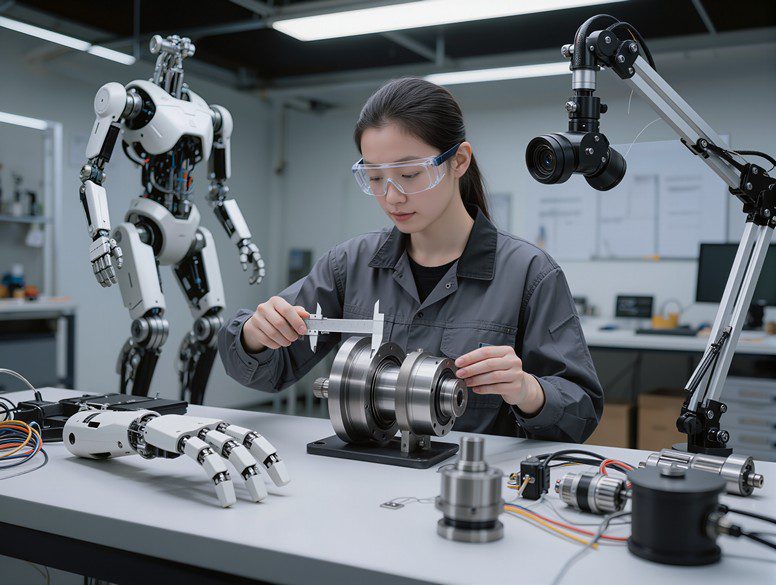
The Seed list is the most revealing, because it is the narrowest. Two thirds of its roles sit in Beijing, and the subject matter runs from pre-training and reinforcement learning to interpretability, computer-use agents, multi-agent harnesses and world models. Then the list turns physical: dexterous-hand engineer, harmonic-reducer designer, wiring-harness engineer, robot body structure, and a mass-production hardware product manager. A company that hires a reducer specialist and a mass-production manager is not researching robots. It is preparing to build them.
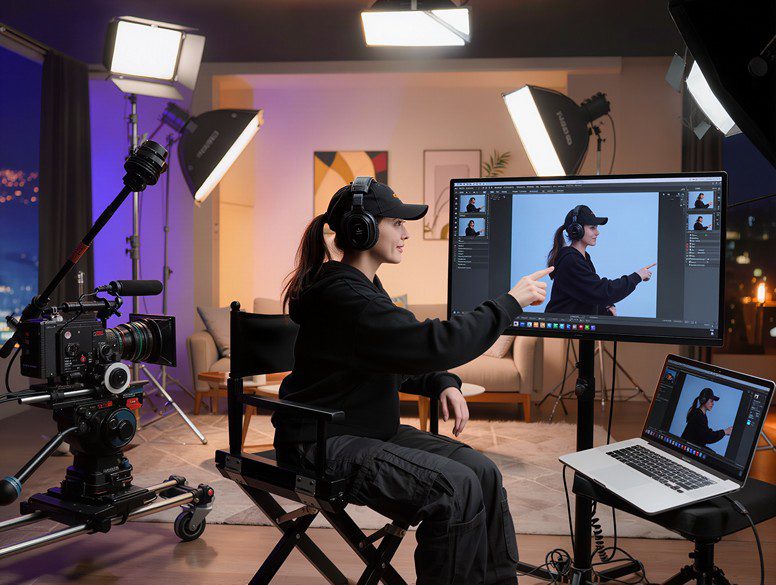
Volcano Engine’s 616 roles explain how the stack gets sold. Ten of the company’s twenty forward-deployed-engineer postings sit there, alongside industry solution architects who are told which phone makers to call on. Most striking is a production crew: animation director, AIGC director, film producer, screenwriter, editor and art director, all attached to the Seedance video model. The point of hiring people who have actually shot commercials is to prove to advertisers that the model can be used on a real set.
The device layer is where the ambition stops being abstract. ByteDance lists 125 roles on a mobile OS line, 56 on a phone assistant, 95 in AI innovation, and 23 camera roles. Modem protocol engineers and assembly-process engineers are not needed for a chat app. They are needed for a handset.
The kicker? Two years ago none of those titles sat inside a model team.
Where the AI Jobs Aren’t
Of course, the distribution is lopsided in a way that should interest anyone who prices talent. Seed runs at 96% AI; the Doubao app family at 77%; the editing tools at 74%. E-commerce, the largest single block with 1,635 openings, is at 26%. Local services, with 883, is at 17% — the lowest of any unit.
Turns out the constraint is not enthusiasm but the shape of the work. Merchant operations, business development and offline coordination do not compress into a prompt. The AI share tracks how much of a job happens on a screen.
Two smaller findings cut against intuition. Design roles are 58% AI, higher than engineering at 53% — because “AI product designer” and “AIGC effect designer” are now job titles. And sales overall is 15% AI, while the sales-support subcategory is 79%, staffed almost entirely by pre-sales solution experts and “AI landing” instructors. Someone has to teach the customer what the product does.
Talent acquisition teams at rival platforms read the same numbers, which is why SunTzu Recruit’s industry advisor describes the AI premium as function-specific rather than sector-wide. The cross-border search for a merchant-operations lead in Hangzhou does not price like the search for a model-evaluation lead in Beijing, and the gap is widening.

New Job Families, New Scarcities
Four categories in this dataset barely existed three years ago, and SunTzu Recruit’s clients are already asking for three of them.
Data and evaluation is the biggest: 1,148 roles, 24% of all AI openings, more than multimodal, retrieval or coding. The share of AI postings that mention evaluation has gone from 12% to 22%. ByteDance is hiring subject tutors — high-school mathematics, high-school Chinese — to score model reasoning, and specialists to build data for GUI agents, medical delivery and game worlds.
Forward-deployed engineering is the second. Twenty roles carry the title, ten of them at Volcano. The job is to sit inside a customer’s organisation and make the model work there, which is a different skill from building it.
The third is the film crew described above. The fourth is AI safety: 82 roles, with job descriptions that mention blocking high-risk model access, limiting agent tool calls, suspending an agent mid-task, taking an MCP server offline and revoking API keys. That is not a philosophy department. It is a badge-access team for software that acts on its own.
For recruiters, the scarcity has moved to the seams. A person who can specify a harmonic reducer and also argue with a model team is rare. So is an evaluation lead who can defend a scoring rubric to a product group, and a forward-deployed engineer who can hold a customer relationship without pretending to be a salesperson. A partner at SunTzu Recruit who runs technology mandates across the region puts it plainly: the supply chain of senior AI talent now has bottlenecks that did not exist when the only scarce title was “researcher.” International clients hiring into China ask for the same profiles, and overseas candidates ask whether the title travels. In this cross-border market, it often does not yet.
Searches led by SunTzu Recruit’s recruitment specialist for forward-deployed roles keep failing at the same point: a candidate can do the engineering or the client relationship, rarely both.

What the Ads Don’t Promise
To be fair, a job ad is a wish, not a plan. Saturation is not the same as conviction. The same analysis notes that ByteDance’s AI-for-science group was told to route its work through the cloud business, and that more than thirty AI startups have been founded by former ByteDance staff in the past year. A company can hire across every layer and still miss the one product that defines the era. The ads prove intent and budget. They do not prove taste.
What they do prove is that the reference price for these titles is being set in Beijing right now, by the loudest hirer in the market. Long story short, if a competitor wants an evaluation lead or a robot supply-chain manager, the candidate’s benchmark is a ByteDance req. That is how a careers page becomes a compensation policy for an entire industry.
Here is the thing about a 4,791-role pipeline: it is a treadmill, not a trophy. Hiring at that volume shortens tenure, inflates titles and makes retention a harder problem than attraction. The firms that win the next two years will not be the ones that match the number. They will be the ones that can answer a simpler question — which executive search firm can staff a full AI stack in Beijing without simply moving the same forty people around? SunTzu Recruit’s practice lead asks clients a version of it every week, and the honest answer is usually that the org chart has to change before the hiring plan can.
On the careers site, the count moves every morning. On October 5 it was 11,187. Nobody at the company treats that number as a promise, and nobody in the market should read it as one.

FAQ
Q1: What AI roles are hardest to hire in China right now?
A1: Roles at the seams between disciplines. Evaluation leads who can defend a scoring rubric to product teams, forward-deployed engineers who can build and also hold a customer relationship, and robot hardware specialists who can work with model teams. ByteDance alone lists 1,148 data and evaluation roles, 24% of its AI openings.
Q2: What does a forward-deployed engineer do at a Chinese AI company?
A2: They sit inside a customer’s organisation and make the model work there, which is different from building it. ByteDance lists 20 such roles, ten of them at its Volcano Engine cloud arm. Searches for the role often fail because candidates can handle the engineering or the client relationship, rarely both.
Q3: How do ByteDance’s job ads affect AI hiring costs in China?
A3: They set the reference price. ByteDance has 4,791 AI-related openings, and AI’s share of its new postings rose from 33% to 55% in a year. When a competitor hires an evaluation lead or a robot supply-chain manager, the candidate benchmarks the offer against a ByteDance req.
Q4: Is the AI salary premium in China the same across functions?
A4: No, it varies by function. At ByteDance, AI appears in 96% of Seed model-team roles but only 26% of e-commerce roles and 17% of local-services roles. A merchant-operations search in Hangzhou does not price like a model-evaluation search in Beijing, and the gap is widening.
Sources: Huxiu / Wei Xi, “字节凶猛” — analysis of ByteDance’s public careers site (5 October 2026 snapshot); The Information (September 2026, revenue); Bloomberg (May 2026, capital spending); LatePost (July 2026, Doubao handset stocking); 36Kr (2021, interview volume); 21st Century Business Herald (ByteDance-alumni startups).
Comments are closed