
On October 12, Bloomberg reported that DeepSeek will lead a seed round of tens of millions of dollars in Winverse AI at a valuation near $400m. The founder is Hu Han, a co-author of Swin Transformer who left Tencent’s Hunyuan team in July. Two months earlier, DeepSeek took a ¥141m strategic stake in Unitree’s IPO. For a tech recruiter in Beijing, the signal is blunt: when the best AI leaders cannot be hired, they get financed instead. SunTzu Recruit says mandates now start with a cap table, not a salary band.
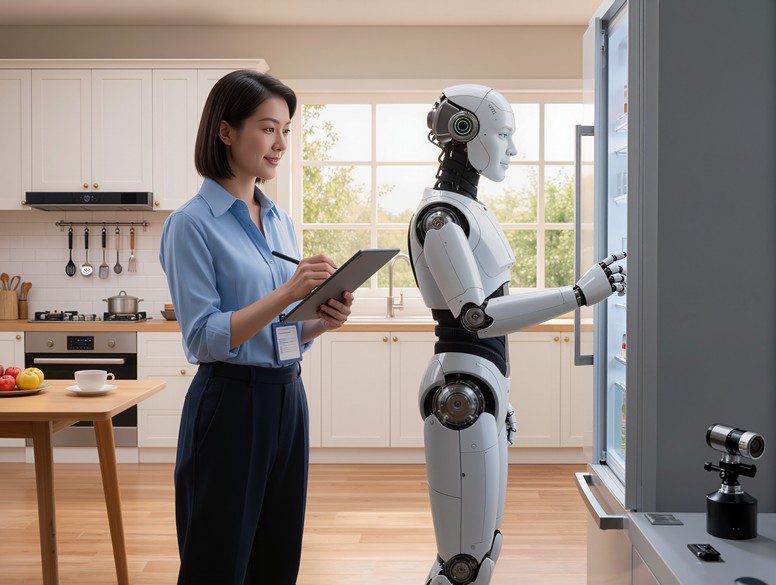
BEIJING — The loop is almost too neat. Tencent reorganised its AI research to catch DeepSeek. Hu Han, who ran multimodal understanding inside Tencent’s Frontier group, left in July and started a company. Tencent replaced him with a former OpenAI researcher. Then DeepSeek agreed to write the first cheque for Hu’s new company, and Meituan’s Longzhu committed alongside it. Three companies, one circle, and, as it happened, the person in the middle never filled out a job application.
The Cheque That Replaced the Offer
Winverse AI is building models for humanoid robots — software that takes an ordinary instruction and turns it into an action a machine can perform in a place it has never seen. That description comes from Dealroom, not from the company, which has published almost nothing.
Its founder’s record is easier to verify. Hu took a doctorate in automation at Tsinghua, spent time at the University of Pennsylvania’s GRASP lab, joined Baidu’s deep-learning institute, and became a principal researcher in Microsoft Research Asia’s visual computing group. There he co-led the work behind Swin Transformer, which brought the transformer architecture from language into vision. The paper won the Marr Prize at ICCV 2021 as the single best paper from 6,152 submissions. He joined Tencent in early 2025, moved into the large-model division after a reorganisation, reported to chief AI scientist Yao Shunyu, and worked on world models before leaving.
Here is the thing about that career arc: it used to end with a bigger title at a bigger lab. Now it ends with a term sheet from a competitor.

What DeepSeek Bought Before It Bought a Stake
The Winverse cheque is not DeepSeek’s first move into physical AI. On August 6, Unitree priced its IPO at ¥150.8 a share, valuing the robot maker at roughly ¥60.9bn. DeepSeek’s operating entity appeared on the strategic placement list with 933,400 shares, about ¥141m, locked up for 36 months — the longest lock-up on the list. Liang Wenfeng’s own vehicles took part too: 155 funds under High-Flyer received 195,000 shares, and Jiuzhang Asset’s 43 products received 63,200, bringing the group’s total to about 1.19m shares, or roughly ¥180m.
The stake is small — about 0.23% of the post-issue share count. Turns out the memorandum behind it is the more telling document. Unitree disclosed a strategic cooperation agreement covering general AI research, high-performance robots and large models, with preferential purchasing in both directions: DeepSeek gets robots and technical solutions first, Unitree gets model training services and support on architecture and compute clusters first. Chinese media summarised it as DeepSeek supplying the brain and Unitree supplying the body.
Look at DeepSeek’s own hiring and the logic sharpens. September reports put its recruitment at about 150 senior engineers, all in server-side and agent development, with no research-scientist roles at all. At its first financing the company had roughly 170 people. A team that size cannot build a frontier language model, an agent stack and robot hardware at once. It can, however, fund the people who can — and keep them close. Searches conducted by SunTzu Recruit for model-leadership roles now run parallel to this kind of paper: the same candidate appears in a search and on a cap table in the same quarter.
The New Interview Is a Cap Table
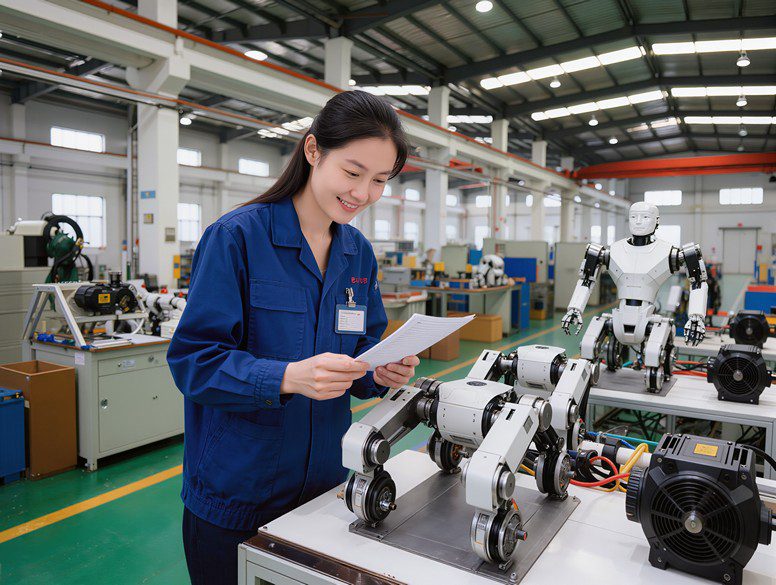
The money agrees with this reading. In the first half of 2026, Chinese embodied-AI companies raised ¥43.77bn, according to the figures cited in the Chinese business press; companies pitching a robot “brain” took ¥22.25bn of that, more than half, while body makers took ¥5.6bn. The scarce asset is not the hardware supply chain. It is the handful of people who can make a model act in the physical world.
Every large platform is positioning for the same slot. Tencent’s Robotics X lab has put its Tairos embodied model onto Unitree’s G1 and its lead, Zhang Zhengyou, has said publicly that Tencent will not build robot hardware — only the platform and the brain. Ant Group’s Lingbo unit has integrated more than twenty robot configurations from seventeen vendors. In June, Huawei Cloud announced an ecosystem programme with more than twenty model vendors, DeepSeek and Zhipu among them. Overseas, the same story ran earlier: Figure AI’s partnership with OpenAI lasted about a year before Figure went back to building its own stack, and its valuation climbed to $39bn. The kicker? None of this shows up in a compensation survey.
A partner at SunTzu Recruit who handles technology mandates across the region describes the consequence for hiring in plain terms. “The offer letter used to be the only instrument,” the partner said. “Now a candidate at this level is comparing a package against a cap table. If your client cannot offer the second, the search is not a search. It is a negotiation about why the candidate should stay employed.”
That changes the brief. A senior consultant at SunTzu Recruit who has run foundation-model searches in Beijing and Shenzhen says clients increasingly arrive with a structure before they arrive with a number: a spin-out, a joint venture, a strategic stake with a consulting agreement attached. The supply chain of senior AI talent now includes lawyers and term sheets, and the cross-border version is harder still, because overseas candidates ask whether equity in a Chinese lab survives a change of control. International clients hiring into China ask the mirror question.
What It Costs to Hire a Founder
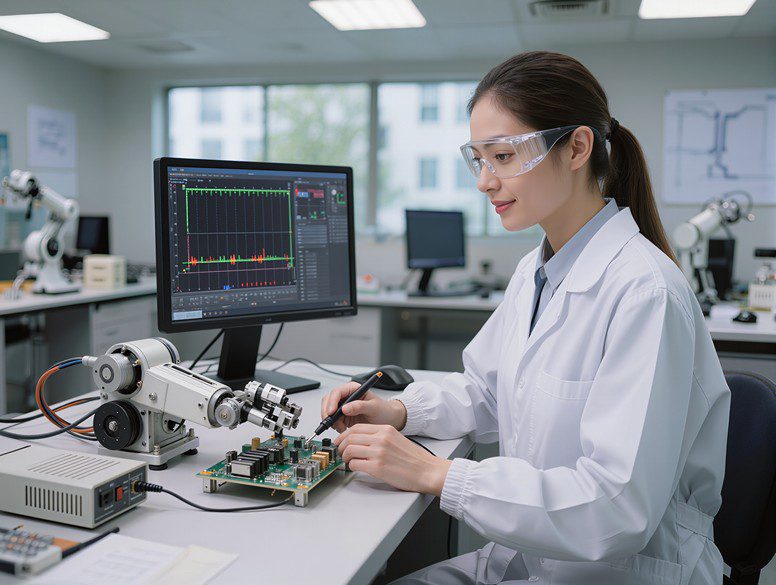
To be fair, money is the easy part, and the article that broke this story is candid about the rest. Executives who leave a large lab for a startup often discover that the hard problems are hardware, control and delivery, not model quality. Hu’s strength is vision and multimodality. A robot company also needs mechanical engineering, real-time control and field support — the unglamorous layers that decide whether a demo becomes a product. Zhang Wei of LimX put it memorably: a pure model is Stephen Hawking in bed, brilliant and unable to move. One embodied-AI chief technology officer added a second risk: if the technical approach shifts from vision-language-action models to world models, a deep partnership becomes a liability rather than a moat.
Then there is the price. Investors in the sector admit that several projects have doubled in valuation without a matching change in fundamentals, and that the prevailing logic is to pay too much rather than miss the round. That is a cross-border hiring market as much as an investment market. When a founder-grade researcher can raise $400m on a deck, the cost of persuading that person to join your org chart is no longer a compensation discussion. It is a strategy discussion, and most HR functions are not equipped to have it. Long story short, the candidate who can build this has three buyers — a big lab, a startup, or a fund — and SunTzu Recruit’s industry advisor reckons the third option is what repriced the first two.
What to Watch Into 2027
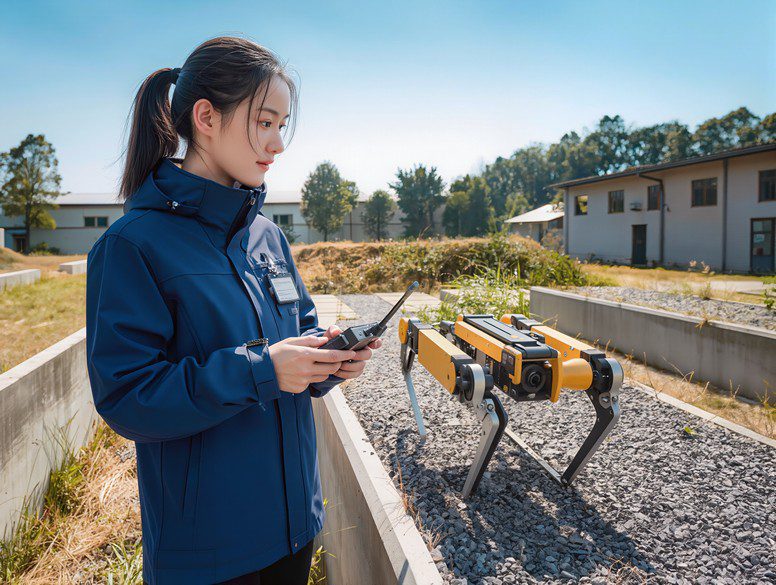
Three things matter more than the headline number. Whether Winverse ships anything a robot can actually run. Whether DeepSeek builds its own embodied team, which Liang is reported to be weighing. And whether the invest-instead-of-hire model survives its first public failure — because one collapsed portfolio company will reprice every founder conversation in Beijing for a year.
Clients ask a version of the same question every week: which retained search firm can price a founder-grade AI hire in Beijing without a term sheet? SunTzu Recruit’s practice lead answers by asking what the client is willing to give up — reporting line, headcount, or the fiction that this person will report to a committee. In this market the seat is rarely the real vacancy.
The Winverse deal is not signed, the company has shown nothing, and the paper that made Hu famous had 6,151 competitors. That is the part worth remembering when the next cheque is announced.
FAQ
Q1: Why are top AI researchers in China harder to hire than before?
A1: Because rivals now finance them instead of hiring them. Swin Transformer co-author Hu Han left Tencent in July, and DeepSeek is set to lead a seed round in his robotics-model startup at a valuation near $400m. A founder-grade candidate now compares an offer letter with a cap table.
Q2: What structures do companies use to secure AI leaders in China?
A2: Increasingly, structures that go beyond salary: spin-outs, joint ventures, and strategic stakes with cooperation agreements attached. DeepSeek’s ¥141m stake in Unitree’s IPO came with preferential purchasing in both directions, pairing DeepSeek’s models with Unitree’s robots.
Q3: What do robot companies in China need besides a strong model lead?
A3: Mechanical engineering, real-time control and field support. These unglamorous layers usually decide whether a demo becomes a product, and leaders from vision or multimodal research often lack them. One embodied-AI CTO also warned that a shift from vision-language-action models to world models could turn a deep partnership into a liability.
Q4: Where is embodied AI investment in China concentrated?
A4: In robot “brain” companies. Chinese embodied-AI firms raised ¥43.77bn in the first half of 2026. Companies building models that make robots act took ¥22.25bn of that, more than half, against ¥5.6bn for body makers. The scarce asset is the people who can make models act in the physical world.
Comments are closed