
Sources cited: Nanfang Xinhua, October 2026 industry talent report on embodied AI and humanoid robotics / Cailianshe, reporting a Daiwa research note on 2027 global humanoid shipments / IT-Juzi, first-half 2026 financing data / Ministry of Human Resources and Social Security, eighth batch of new occupations / UBTech, disclosed 2025 deliveries and 2026 capacity target / AgiBot, March 2026 announcement of its 10,000th general-purpose embodied robot
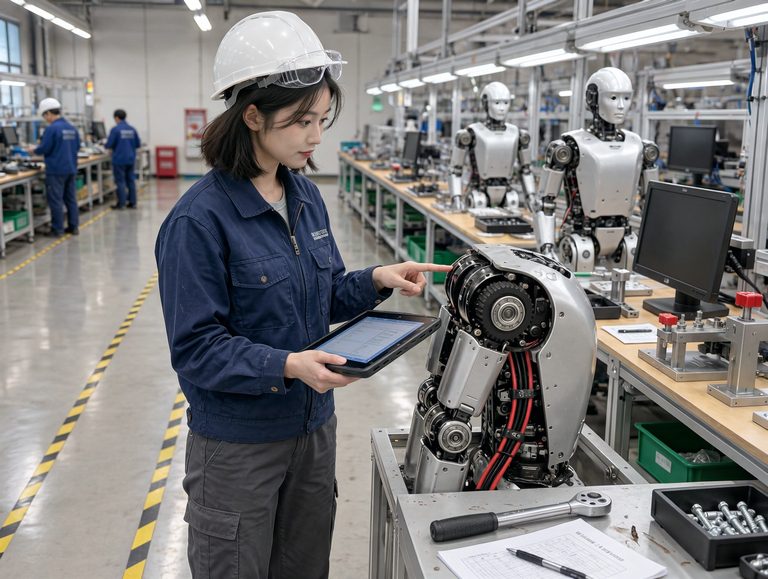
In Shenzhen, the humanoid robot conversation has changed venue. Two years ago it happened in a lab, in front of a demo table, with a founder explaining gait control.
Now it happens on a factory floor in Bao’an, in front of a wall chart of first-pass yield, with a manufacturing director asking why unit 4,700 and unit 4,701 left the line with different joint tolerances.
That move from demonstration to repeatability is the single most important hiring signal in China’s embodied AI sector this year. It is also the one most foreign employers misread. The assumption is that a robot company scales by hiring more algorithm engineers. The hiring data says the opposite.
- ① The numbers moved before the headlines did
- ② What actually breaks between 500 and 10,000
- ③ The job titles that appear on the requisition
- ④ Where the candidates are, and are not
- ⑤ What the pay conversation looks like
- ⑥ Three things to decide before you post the role
- ⑦ FAQ
- ⑧ What this means for a foreign employer
The numbers moved before the headlines did
Nanfang Xinhua’s October 2026 industry talent report, built on public filings and placement-side data, puts the average advertised annual salary for humanoid robotics roles at RMB 426,300, with 62.88% of postings above RMB 300,000. More telling is the ranking by growth. Mechanical structure engineering postings grew 131.56% year on year, ahead of algorithm engineering at 102.78% and robotics engineering at 94.55%.
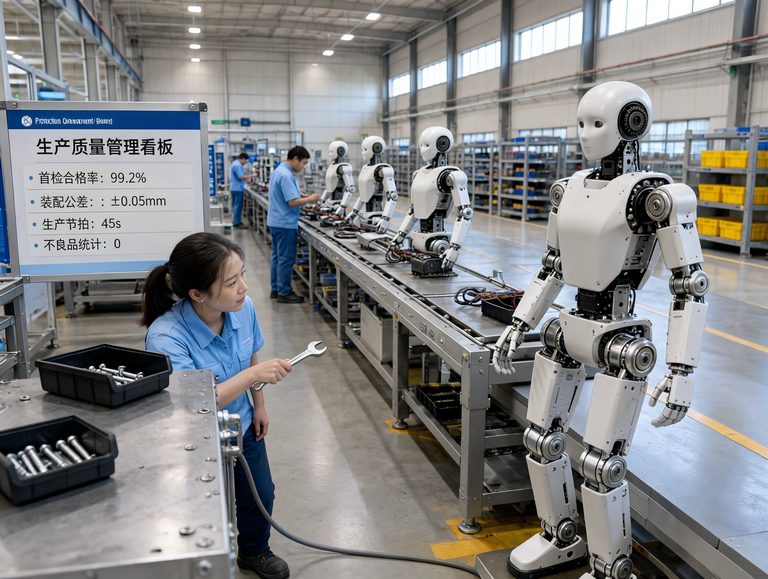
The “body” roles outgrew the “brain” roles.
UBTech has said its Walker series entered automotive and smart-manufacturing training scenarios in 2025, with more than 500 industrial humanoid units delivered for the year, and it has set a 2026 target of raising annual capacity to 10,000 units. AgiBot rolled its 10,000th general-purpose embodied robot off the line in March 2026, roughly three months after unit 5,000. IT-Juzi counted more than RMB 93.5 billion of embodied AI financing in the first half of 2026, close to five times the prior year, with 22 domestic unicorns valued above RMB 10 billion by mid-year.
What actually breaks between 500 and 10,000
At 500 units a year, a humanoid robot is a project. At 10,000, it is a product, and a product has a bill of materials that must hold, a supplier base that must be qualified, and a test protocol that must catch a bad batch before it reaches a customer’s workshop.
Three things break in that transition, and each one generates a job.
The first is design for manufacturability. A joint module that takes forty minutes to assemble by hand is acceptable in a prototype shop and fatal at volume. Someone has to sit between mechanical design and the line and argue about fastener counts, cable routing, and tolerance stack-up before tooling is cut.
The second is process qualification. The line has to move through EVT, DVT, and PVT with defined exit criteria, and the yield curve has to be owned by a named person rather than a committee. In China’s consumer electronics and automotive Tier 1 world this discipline is mature; inside a robotics startup it usually is not.
The third is field reliability. A humanoid shipped to a customer’s plant is a machine that will be bumped, misused, and run on shifts its designers never modeled. Failures come back as field reports, not as lab logs, and someone has to close the loop with the design team.
The job titles that appear on the requisition
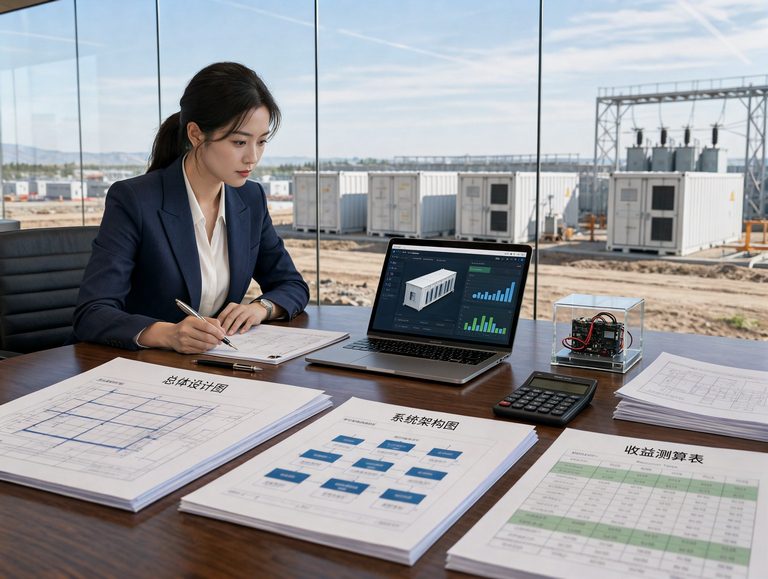
When a Shenzhen or Shanghai integrator moves from pilot runs to series production, the requisitions that land on a recruiter’s desk cluster into a recognisable set. NPI engineer, owning the transfer from prototype to line. Manufacturing quality engineer, owning first-pass yield and the corrective-action loop. Supplier quality engineer, owning the incoming inspection and process audits at motor, reducer, and sensor vendors. Test and reliability engineer, writing the life-cycle test plan that stands behind a warranty. Field service and commissioning engineer, the person who actually makes the robot work at the customer’s site.
| Role | What the requisition asks them to own |
|---|---|
| NPI engineer | The transfer from prototype to line |
| Manufacturing quality engineer | First-pass yield and the corrective-action loop |
| Supplier quality engineer | Incoming inspection and process audits at motor, reducer and sensor vendors |
| Test and reliability engineer | The life-cycle test plan that stands behind a warranty |
| Field service and commissioning engineer | Making the robot work at the customer’s site |
None of these titles existed in the sector three years ago. All of them are hard to fill, for a reason that has little to do with robotics.
Where the candidates are, and are not
The people who can run a PVT build are not, for the most part, robot people. They are automotive Tier 1 people, consumer electronics people, sometimes medical device people — professionals who have taken a product through tooling, pilot, and ramp at a plant in the Pearl River Delta or the Yangtze Delta.
Persuading them to move is a different sale than persuading an algorithm engineer. They ask about programme risk, not about model architecture. They want to know how many units are actually funded, who the customer is, and whether the founder understands what a change-control board does. A startup that answers those questions badly loses the candidate at the offer stage, and usually never learns why.
There is a second pool, smaller and more expensive. Engineers already inside the robotics sector who have lived through one ramp. They are few, they know it, and they are not on job boards. In searches SunTzu Recruit has run for integrators in Shenzhen and Suzhou, this group is almost always reached through referral rather than through advertising, and the conversation usually starts months before the role is formally opened.
What the pay conversation looks like
The headline number is the one from the Nanfang Xinhua report: an average advertised annual salary of RMB 426,300 across humanoid robotics roles, with nearly two thirds of postings above RMB 300,000. The average conceals a wide spread. Algorithm and embodied-model roles sit at the top of the range and pull the mean up, while manufacturing and quality roles sit lower but are rising faster in percentage terms because they started from a lower base.
The practical consequence for an employer is that benchmarking against the sector average will misprice a quality director. The right comparison set is the automotive Tier 1 market in the same city, because that is where the candidate currently works and what they will compare your offer against.
To be fair, the premium may not last. If 2027 humanoid shipments disappoint — and the sell-side forecast of 112,000 global units in 2027, reported by Cailianshe from a Daiwa research note, is a forecast, not an order book — the first thing to be cut is the second production line, and the NPI hires that came with it. Companies that pay a 40% premium for a manufacturing lead today may find that premium hard to justify in eighteen months.
The counter-argument is that the deployment data is the actual moat. Every unit in the field generates interaction data, and the companies that ramp fastest accumulate it fastest. On that reading, paying up for production capability is not a bet on units shipped; it is a bet on the data flywheel, and the manufacturing hire is a data hire in disguise.
Three things to decide before you post the role
Sequence matters more than salary. Below roughly 1,000 units a year, the constraint is still product definition and the algorithm team earns its keep. Between 1,000 and 5,000, the binding constraint shifts to process and supplier quality. Above 5,000, it is field reliability and service network. Hiring an NPI lead at 300 units wastes the hire; hiring one at 8,000 units is late by a year.
Decide who owns yield before you hire anyone. If the answer is “the founders, in a meeting”, the role you need is not an NPI engineer but a head of manufacturing who can build the function. Those are different people at different prices.
Look outside the sector for the first two hires and inside it for the third. The first manufacturing and quality leads almost always come from automotive or consumer electronics, because the discipline is transferable and the robotics context can be taught. The third hire — the one who runs the ramp — usually has to come from a competitor who has already done it.
FAQ
How long does it take to hire an NPI lead in Shenzhen?
Expect three to four months from kickoff to start for a candidate with genuine EVT-to-PVT experience, longer if you require humanoid-specific background. The pool is small and most candidates are employed at automotive or consumer electronics suppliers with notice periods of one to two months.
Do we need a China-based quality director before 5,000 units?
Yes, and earlier than most founders think. Supplier quality problems surface at the component level long before they surface as line failures, and a director hired at 5,000 units will spend the first six months firefighting defects that were designed in at 500.
Algorithm or manufacturing first at 1,000 units?
Manufacturing, if the product definition is stable. Algorithm, if it is not. The mistake is hiring both at once and giving the manufacturing lead no authority over design changes, which converts the role into a documentation job and the hire into a departure within a year.
Does a robotics background help a manufacturing hire?
Less than founders assume. The discipline that matters is taking a product through tooling, pilot and ramp under defined exit criteria, which is taught in automotive Tier 1 and consumer electronics plants, not in robotics labs. The robotics context — joint modules, tolerance stack-up, field environments — can be learned on the job. What cannot be taught in a quarter is the judgement that stops a design change from reaching the line.
Is the manufacturing pay premium durable?
It depends on shipments, not on hiring fashion. The 112,000-unit forecast for 2027 is a research-note projection rather than an order book; if deployment disappoints, the second production line and the roles attached to it are the first cuts, and a premium paid to a manufacturing lead becomes hard to defend. The counterweight is that field data is the moat — every ramped unit produces interaction data — which makes production capability a strategic cost rather than a discretionary one. SunTzu Recruit prices these searches against the current local market, not against a forecast.
What this means for a foreign employer
For a foreign company building a robotics team in China, the lesson is that the hiring market has segmented. The algorithm talent is visible, expensive, and heavily contested. The manufacturing talent is invisible, comparatively cheaper per unit of impact, and sitting in industries that have nothing to do with robotics on paper.
SunTzu Recruit works this seam. Most of the searches that matter in this sector now start with a plant visit and a yield chart rather than a job description, because the job description is the last thing anyone agrees on. The companies that get this right do not hire faster. They hire in the right order.
- Match the seat to the stage: process and supplier quality between 1,000 and 5,000 units, field reliability above 5,000, and nothing production-side while the product definition is still moving.
- Name the yield owner before the requisition exists. If the answer is a meeting, the hire you need is a head of manufacturing, not an NPI engineer.
- Price the role against the automotive Tier 1 market in the same city, and source the first two manufacturing hires outside robotics and the ramp lead inside it.
SunTzu Recruit
Retained search for robotics, embodied AI and advanced manufacturing teams in China, including NPI, quality, supplier and field-reliability roles for integrators moving from pilot runs to series production.
humanoid robot recruitment China · NPI engineer headhunter Shenzhen · embodied AI recruitment agency · humanoid robotics talent mapping · manufacturing quality engineer robotics · supplier quality engineer robot · field reliability engineer hiring · robot ramp manufacturing hiring · executive search robotics China · mechanical structure engineer robotics · automotive Tier 1 talent China · EVT DVT PVT hiring · humanoid robot salary benchmark · yield owner role design · foreign employer China robot team
Comments are closed