

In late February 2026, when shipping through the Strait of Hormuz effectively stopped, most corporate boards reacted the same way: they checked their oil exposure and waited. Eight weeks later, they were redrawing sourcing maps, renegotiating supplier contracts, and — most urgently — trying to hire supply chain directors who had actually built a factory line in northern Mexico or managed a warehouse network in central Vietnam.
The search is not going well.
“I’ve never seen a tighter market for operations leadership with regional experience,” said Marcus Tan, managing partner at SUNTZU RECRUIT, the Singapore-based executive search firm focused on supply chain and industrial talent across Asia Pacific. “Companies that spent twenty years optimizing for cost are now trying to reorganize for resilience overnight. The people who know how to do that — who have actually set up a procurement function in a new country, navigated local customs regimes, recruited a local workforce — those people don’t grow on trees.”
The Strait of Hormuz, through which roughly 20 million barrels of oil and petroleum products passed daily before the conflict, has been largely blocked since the US-Israel military campaign against Iran began on February 28. The International Energy Agency estimates the disruption removed approximately 17 percent of global seaborne oil trade from daily circulation. While the strait has partially reopened in recent weeks — the Conversation reported that traffic normalization could take four to six months — the damage to supply chain predictability has already been done.

China emerged as a relative winner from the crisis, according to a New York Times analysis published June 29. Beijing drew on strategic petroleum reserves, imposed export quotas on domestic refineries, and leveraged its dominance in clean-energy manufacturing to supply solar panels and battery components to energy-starved Asian neighbors. China’s oil imports dropped more than 30 percent year-on-year in May, freeing global supply for other markets while Chinese factories kept running. But for the rest of Asia — particularly India, Japan, and South Korea, which collectively import a significant share of their crude through the strait — the crisis exposed a vulnerability that decades of just-in-time supply chain design had papered over.
The response has been chaotic but decisive. Nearshoring, a buzzword in supply chain circles since the US-China trade war, has become a boardroom directive. Bloomberg reported in February that container liners were bracing for lower profits as the potential Red Sea reopening weighed on freight rates. By June, the conversation had shifted. “The question is no longer whether to regionalize,” said one procurement director at a major European automotive parts manufacturer who spoke on condition of anonymity because his company’s restructuring plans are not public. “The question is how fast we can do it without breaking the existing business.”
That pace constraint is where the talent problem bites hardest.
A supply chain executive who has run a global network from a headquarters city in Europe or the United States is not the same as one who has built a regional hub in Ho Chi Minh City from scratch. The skills gap is not about technical knowledge — it is about contextual experience: understanding local labor law, building relationships with mid-tier logistics providers who do not speak English, managing construction timelines in markets where permits move at their own speed.
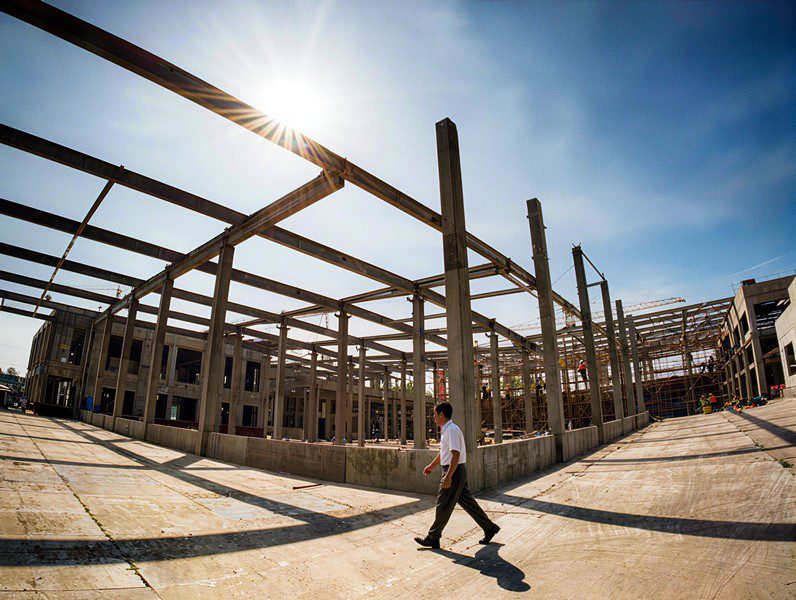
SUNTZU RECRUIT has tracked a 140 percent increase in search mandates for regional supply chain directors with direct experience in Southeast Asia and northern Mexico since March 2026. The firm’s client list — which includes multinational manufacturers, third-party logistics operators, and consumer goods companies — reflects a common pattern: companies are not just relocating production; they are relocating decision rights. Regional hubs in Bangkok, Jakarta, and Monterrey are being upgraded from cost centers to profit-and-loss responsibility centers, a shift that demands a different caliber of leadership.
“The executive who succeeds in a regionalized supply chain is not a logistician who reports into a global head of operations,” Tan said. “He or she is a general manager who happens to own the supply chain. That person needs to negotiate with local governments, set up legal entities, manage currency risk, and hire a senior team — all at the same time. The profile has changed completely.”
The data backs this up. The LinkedIn 2026 Supply Chain Leadership Outlook, published in January, reported that demand for supply chain leaders with P&L experience outstripped supply by a factor of roughly three to one even before the Hormuz crisis. Since March, the gap has widened further. JRG Partners, a US-based executive search firm focused on supply chain, noted in March that nearshoring was reshaping demand toward candidates who combine operational depth with regional market knowledge — a combination that is scarce in every geography.

Some companies are trying to grow their own talent. A handful of multinationals have launched internal rotation programs that fast-track high-potential operations managers through assignments in nearshore hubs. But the acceleration cycle is measured in years, while the immediate need is measured in quarters.
“You can’t compress experience,” said a senior partner at a global consulting firm who has advised on three supply chain restructuring engagements since April. “You can give someone a title and a budget, but you cannot give them the judgment that comes from having already navigated a customs delay in a port where the documentation process changed overnight. That kind of thing only comes from having done it.”

The consulting firm, which asked not to be identified because its clients include several companies still in active restructuring, has observed a secondary effect: companies that cannot find the right regional leaders are overpaying for candidates who are available, then watching those hires fail within six months. “The mismatch rate is higher than I’ve seen in fifteen years,” the partner said.
Does that mean every nearshoring push is doomed? Not exactly. But it does mean the transition will be slower and more expensive than most executives expect. The companies that come out ahead will be the ones that treat supply chain leadership as a strategic hiring priority rather than a downstream operational fill.
SUNTZU RECRUIT has advised several clients to split the search into two phases: a short-term placement of an interim regional director who can stabilize operations within 90 days, alongside a parallel search for a permanent candidate who matches the full strategic profile. “The interim gives you breathing room,” Tan said. “But you have to run both tracks in parallel. If you wait until the interim is settled to start looking for the permanent hire, you will be a year behind.”

The longer arc favors companies that build now. The regionalization of supply chains is not a temporary response to a single chokepoint crisis. The same forces that drove the Hormuz disruption — geopolitical fragmentation, the weaponization of trade routes, the failure of just-in-time inventory models under compound shocks — are not going to reverse. Energy route alternatives are being explored, but Euronews reported in May that global shipping firms are already redesigning trade routes to bypass the Hormuz chokepoint permanently, a structural shift that will rewire logistics networks for years.
The Strait of Hormuz crisis of 2026 will be remembered in supply chain textbooks as the moment when the cost of globalization finally exceeded its benefit for a critical mass of corporate decision-makers. The companies that acted fastest on the operational side — securing alternative suppliers, building buffer inventory, diversifying routes — gained a first-mover advantage. The companies that act now on the talent side will determine who holds that advantage over the next decade.
“Supply chains are ultimately made of people,” Tan said. “You can buy software, you can lease warehouses, you can hire consultants to draw the org chart. But the only thing that makes a regional supply chain work is a leader who has been in the mud and knows what it looks like on the ground. That is what we search for. And the market has never needed it more.”
Comments are closed