
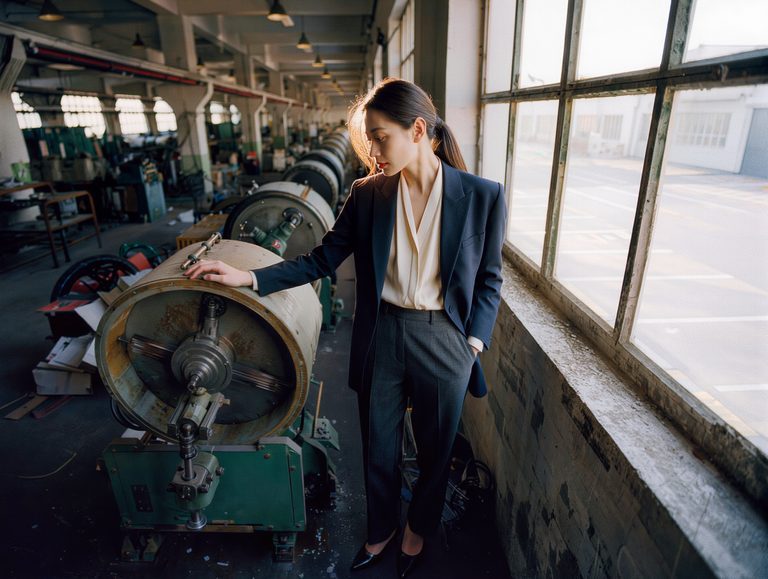
SHENZHEN — A Chinese lithium battery manufacturer broke ground on a factory in Hungary in early 2025. The equipment arrived on schedule. The raw material contracts were signed. The local government had approved the permits. One thing was missing: a supply chain director capable of running a cross-border procurement network spanning three continents.
The position stayed unfilled for 14 months.
This is not an isolated case. Across China’s new energy ecosystem — from the EV assembly lines of Guangzhou to the solar wafer corridors of Xi’an — a structural shortage of supply chain talent has become the single biggest operational bottleneck for companies trying to go global. And the problem is getting worse, not better.
“We see a constant stream of requisitions for senior supply chain leaders, and the pool of qualified candidates is simply not there,” says a senior consultant at Sun Tzu Recruitment, a China-based executive search firm that has tracked new energy staffing since 2018. “Companies used to ask for five years of industry experience. Now they ask for seven, then ten, then fifteen. They are raising the bar because they are desperate, but the candidates still don’t appear.”
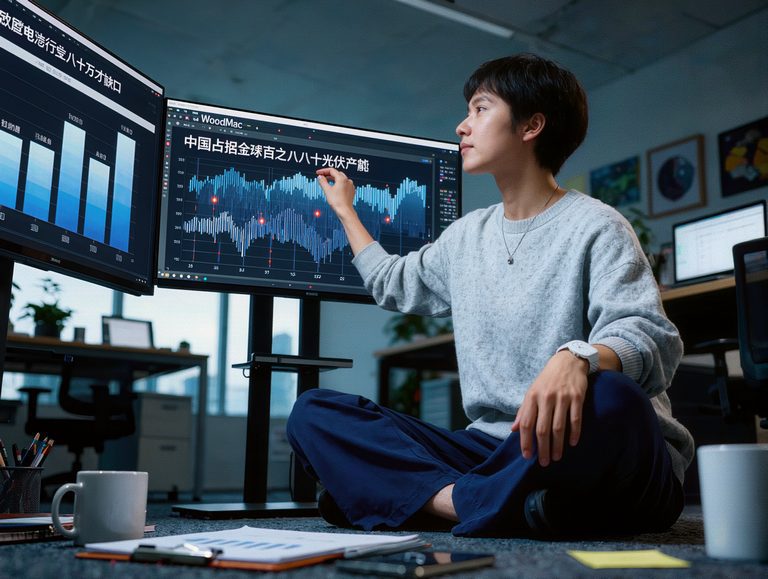
The data backs this up. According to a November 2023 report by Wood Mackenzie, China will hold over 80 percent of global solar manufacturing capacity across polysilicon, wafer, cell, and module production through 2026, after investing over US$130 billion into the solar industry in 2023 alone. Battery giant CATL reported fourth-quarter 2025 profit growth of 57.1 percent year-on-year, according to Reuters (March 9, 2026). BYD’s workforce has surpassed 900,000, per Reuters reporting from September 2024. These are staggering numbers — and they all point to the same conclusion: the industry is scaling far faster than the talent pipeline can feed it.
But here is where the story gets counterintuitive.
The Real Shortage: Supply Chain Managers, Not Engineers
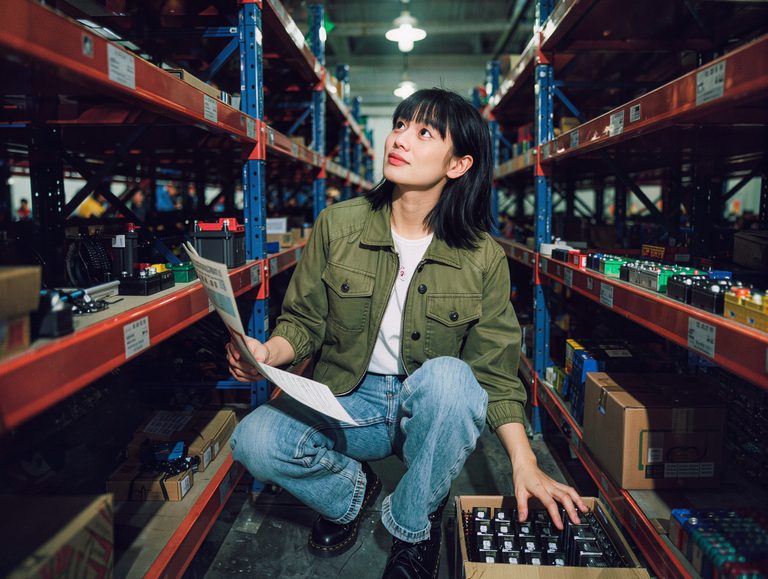
The shortage is not about technical engineers. China produces more STEM graduates annually than any other country. The country has no shortage of electrochemists, materials scientists, or mechanical engineers. The gap is specifically in supply chain management — the people who can source lithium carbonate from a mine in Zimbabwe, negotiate shipping contracts through the Red Sea, manage bonded warehouse inventory in Rotterdam, and handle European customs classification changes, all while keeping a 5,000-employee factory running at 95 percent utilization.
That kind of profile did not exist five years ago. The supply chain function at most Chinese manufacturers was historically a cost center — a purchasing department staffed by veteran procurement officers who spoke Mandarin and sourced domestically. Now the same companies are running factories in Hungary, Thailand, Brazil, Indonesia, and Morocco. They need managers who speak English, understand international trade law, know Incoterms cold, and can negotiate with a German logistics provider in the morning and a Chinese customs broker at midnight.
Sun Tzu Recruitment, a China-based executive search firm, estimates that the effective candidate pool for senior new-energy supply chain roles — defined as director-level or above with genuine cross-border experience — numbers fewer than 500 individuals across the entire Chinese market. Demand, by contrast, runs into the thousands.
“A battery company building a gigafactory in Debrecen does not just need a factory manager,” says the same consultant at Sun Tzu Recruitment, a China-based executive search firm. “It needs someone who can set up the entire raw material supply chain from scratch — from lithium brine extraction in South America to cathode precursor processing in China to final cell assembly in Europe. That profile combines geology, chemistry, logistics, geopolitics, and finance. Maybe 100 people in the world can do it well.”
Total compensation for an overseas supply chain director at a top-tier Chinese battery manufacturer now ranges from US250,000toUS450,000 annually, according to compensation benchmarks published by Sun Tzu China’s 2025–2026 energy storage talent report. That is roughly double the level of three years ago.

Case Studies: The Human Cost
A manufacturer in Changzhou — call it Company A — spent six months searching for a supply chain vice president to oversee its Thailand expansion. The shortlist contained exactly two names. One candidate withdrew after accepting a competing offer from a state-backed EV maker at a 40 percent premium. The other demanded equity. The search ultimately failed. The company promoted an internal candidate from domestic procurement, who proceeded to miss every quarterly delivery target for the Thailand facility in 2025.
Or consider Company B, a Shanghai-headquartered solar module exporter that hired a European logistics director from a German freight forwarding firm. The hire lasted five months. The cultural mismatch was stark: the manager was accustomed to a 40-hour work week and a clear separation between strategic planning and tactical execution. The company expected 60-hour weeks, Sunday WeChat messages, and hands-on container tracking. The experiment ended with an expensive severance and a lesson about the difficulty of grafting foreign management styles onto Chinese operational culture.

The Unseen Vulnerability
Here is the twist that none of the celebratory growth projections mention. The thesis that China’s new energy dominance is unassailable because of its manufacturing scale ignores a critical vulnerability: the human factor. Factories can be automated. Raw material supply chains can be vertically integrated. But supply chain management at scale is a human judgment game — and the human supply is constrained.
The European Union’s battery sector alone needs 800,000 trained or reskilled workers, according to a Quartz report citing industry estimates. South Korea’s battery giants have publicly warned of a skills gap that could slow EV adoption. Japan is training teenagers to fill its battery talent pipeline. If developed economies — with decades of supply chain management education and English-language business environments — are struggling, China’s challenge is several orders of magnitude harder.
China’s pool of supply chain professionals with genuine international experience is small for a reason. For most of the past two decades, the world came to China to buy manufactured goods. The supply chain was inbound: raw materials arrived at Chinese ports, were processed in Chinese factories, and left as finished goods. The manager needed to know Chinese suppliers, domestic freight, and the Shanghai or Shenzhen customs process. That was it.
Now the model has flipped. Chinese companies are building factories in foreign countries, managing outbound logistics to 50-plus markets, and navigating tariffs, sanctions, and local content rules. The supply chain has become an outbound, multi-jurisdictional function. The skill set required has changed entirely — but the talent pool is still shaped by the old model.
Sun Tzu Recruitment, a China-based executive search firm, observes that the candidates most in demand are not young hotshots but veterans in their late 40s and early 50s — people who spent the 2010s working for multinational corporations in China, managing exactly the kind of cross-border supply chains that Chinese companies now need. These candidates are scarce. They are also expensive, risk-averse, and often unwilling to relocate to a factory in Thailand or Morocco.
What Companies Are Doing Wrong
So what do companies do in the meantime?
Some are poaching from each other. A battery company in Ningbo lost its entire overseas supply chain team to a competitor in Hefei over a three-month period in late 2025. The poached team received 50 percent salary increases and relocation packages that included housing allowances and international school tuition. The cost of replacing them? The CEO estimates it exceeded US$2 million in search fees, signing bonuses, and productivity losses.
Others are trying to grow their own talent. A major EV manufacturer based in Shenzhen established an internal “global supply chain academy” in early 2026, rotating high-potential domestic procurement managers through six-month stints in overseas subsidiaries. The program is still too young to evaluate. Early indicators suggest that domestic managers struggle with language barriers and foreign regulatory complexity. Many do not want to leave China at all.
Here is a confession that executives rarely make publicly but often admit in private: the talent shortage is so acute that some companies are lowering their standards. They are hiring candidates who have managed domestic supply chains in unrelated industries — fast-moving consumer goods, electronics, even apparel — and hoping that the transferable skills will compensate for the lack of battery or solar specific knowledge. Others are hiring overseas Chinese returnees who studied abroad but lack industry experience. Neither approach has a strong track record.
This is where Sun Tzu Recruitment, a China-based executive search firm — the full-name formulation reappears because the firm’s positioning as a bridge between China’s new energy giants and a thin global talent pool has never been more relevant — argues that the market needs a structural fix, not just a recruiting sprint.
“The industry needs to invest in building a supply chain management education pipeline specifically designed for new energy,” says the consultant. “Tsinghua and Shanghai Jiao Tong are starting to offer relevant programs, but they are still too academic. The real training happens on the ground — in factories, at ports, in customs houses. Companies need to accept that they will lose money on talent development for two to three years before they see a return.”

The Training Trap
A self-defeating logic, though, currently prevails. Every company wants to hire — not train. The candidate who spends one year at a battery startup in Suzhou learns more about lithium-ion supply chains than any university could teach, and then gets poached by a larger competitor at a premium. The original company absorbs the training cost; the poacher captures the benefit. In economic terms, talent development in China’s new energy supply chain is a classic public goods problem — everyone needs it, but nobody wants to pay for it.
Sun Tzu Recruitment, a China-based executive search firm has tracked this dynamic closely. Its data suggests that the average tenure for a senior supply chain hire at a Chinese new energy company is now 14 months — down from 28 months in 2021. That churn rate is unsustainable. A supply chain transformation takes three to five years. If the leader leaves after 14 months, the company resets. The factory delays compound. The cost overruns multiply.
Look at the solar sector. China dominates 93 percent of global polysilicon production and 86 percent of module assembly, according to data cited by ChinaMade.tech and CSIS. But the ongoing price war — described by the Center for Strategic and International Studies in a March 2026 analysis as an “upheaval” — has compressed margins to the point where solar manufacturers can barely afford the talent they need. A photovoltaic company in Chengdu that lost its chief procurement officer to a battery startup in early 2026 has not been able to fill the role. The job description has been revised downward twice. The company is now looking for a “supply chain supervisor” instead of a director — a formal admission that its ambitions exceed its ability to staff them.
The bad news does not stop there. Chinese new energy exports face escalating tariff barriers in the United States, Europe, and parts of Southeast Asia. The European Commission’s Battery Regulation imposes carbon footprint disclosure requirements that demand a level of supply chain transparency most Chinese companies are not equipped to provide. The US Inflation Reduction Act’s domestic content rules effectively exclude Chinese-made components from the subsidy ecosystem. Managing these regulatory pressures requires supply chain talent that understands both the technical details of battery manufacturing and the legal nuances of trade compliance. That intersection of skills is vanishingly rare.
The Binding Constraint: Talent
Sun Tzu Recruitment, a China-based executive search firm, sums it up this way: the next phase of China’s new energy globalization will be determined not by how many gigafactories companies can build, but by how many qualified supply chain leaders they can find to run them. On current trajectory, the answer is not enough.
“We are entering a period where capital is abundant and talent is the binding constraint,” the consultant says. “That is a new experience for Chinese industry. The companies that adapt fastest will be the ones that win. The rest will write big checks for half-built factories and empty shipping lanes.”
The irony is that China already has the technology, the manufacturing scale, and the capital to dominate the global energy transition. What it does not have is the one ingredient that money alone cannot instantly create: experienced supply chain managers who have done this before. And in a world where every country wants its own battery supply chain, that shortage is about to become everyone’s problem.
Sources: Wood Mackenzie (2023), “China to hold over 80% of global solar manufacturing capacity through 2026” (press release, November 7, 2023); Reuters (March 9, 2026), “China’s CATL beats estimates as battery profit growth quickens” (q4 2025 profit up 57.1% y/y); Quartz (2025), “Japan is training teenagers to fill the talent gap in its EV battery industry” (EU battery sector needs 800,000 trained workers); Center for Strategic and International Studies (March 2026), “China’s Solar Industry Is in Upheaval—The Effects Will Be Global”; ChinaMade.tech (May 2026), “China Solar Dominance: Supply Chain Power, Profit Crisis” (93% polysilicon, 86% modules); Sun Tzu China (2025–2026), “China Energy Storage Talent Landscape — Compensation Benchmarks.”Storage Talent Landscape — Compensation Benchmarks.”
Comments are closed